The Role of Eavestroughs in Preventing Basement Leaks in Oshawa Homes
- theeavestroughguy8
- Feb 5
- 5 min read
Basement leaks are one of the most common and frustrating problems homeowners face in Oshawa. In many cases, people blame foundation cracks or poor drainage. However, what many homeowners do not realize is that eavestroughs play a critical role in keeping basements dry.
At The Eavestrough Guy, we often see basement water issues that start above the ground, not below it. When eavestroughs are clogged, damaged, or poorly installed, rainwater and melting snow are directed straight toward your home’s foundation. Over time, this leads to moisture buildup, leaks, and even serious structural damage.
In this guide, we will explain how eavestroughs prevent basement leaks, why they are especially important in Oshawa’s climate, and what homeowners can do to protect their property.

Understanding Oshawa’s Weather and Water Challenges
Oshawa experiences a mix of heavy rain, snow, freeze-thaw cycles, and spring melt-offs. Because of this, water management around homes is extremely important.
During heavy rainfall or rapid snowmelt, a large amount of water lands on your roof in a short time. Without a properly working eavestrough system, that water falls directly next to your foundation. As a result, the soil becomes saturated, hydrostatic pressure builds, and water finds its way into your basement.
Therefore, eavestroughs act as the first line of defense against basement leaks.
What Are Eavestroughs and How Do They Work?
Eavestroughs, also known as gutters, are channels installed along the edges of your roof. Their main purpose is to collect rainwater and melting snow and safely direct it away from your home using downspouts.
In simple terms, eavestroughs:
Catch water from the roof
Control where the water flows
Prevent water from pooling near the foundation
Without them, water drops straight down and soaks into the ground around your basement walls.
Why Basement Leaks Often Start at the Roof
Many homeowners assume basement leaks are only a foundation problem. However, in reality, most basement leaks begin with poor water management at roof level.
When eavestroughs fail, water:
Accumulates near foundation walls
Seep through small cracks
Weakens concrete over time
Creates mold-friendly damp conditions
As a result, even a strong foundation can eventually leak if exposed to constant moisture.
How Proper Eavestroughs Protect Your Foundation
1. Redirecting Water Away From the Home
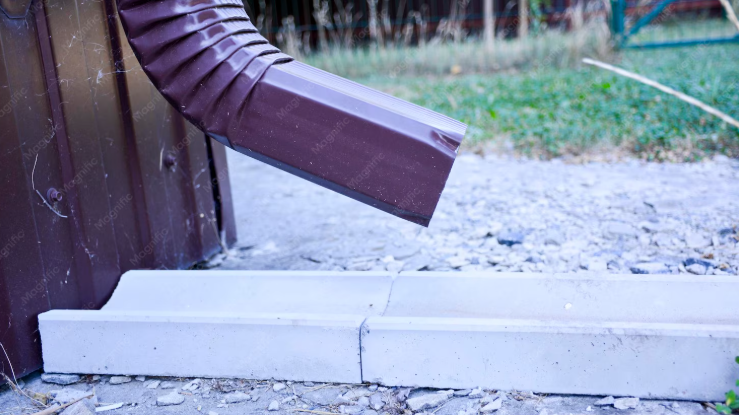
First and foremost, eavestroughs move water away from the foundation. Downspouts should extend several feet from the house, ensuring water drains into safe areas.
This reduces soil saturation and minimizes pressure on basement walls.
2. Preventing Soil Erosion
When water repeatedly pours near your home, it washes away soil. Over time, this erosion exposes foundation walls and creates uneven settling.
By controlling water flow, eavestroughs help maintain stable ground around your home.
3. Reducing Hydrostatic Pressure
Hydrostatic pressure builds when the soil around your foundation becomes waterlogged. This pressure pushes water through tiny cracks in basement walls.
By keeping the surrounding soil dry, eavestroughs significantly reduce this pressure.
4. Protecting Window Wells and Basement Entrances
In many Oshawa homes, basement windows sit close to ground level. Poor drainage can cause window wells to fill with water, leading to leaks.
Proper eavestrough placement helps prevent water from pooling around these vulnerable areas.
Common Eavestrough Problems That Lead to Basement Leaks
Unfortunately, having eavestroughs is not enough. They must also be well-maintained and correctly installed.
Clogged Eavestroughs
Leaves, debris, and shingle grit can block water flow. When this happens, water overflows and spills directly beside your foundation.
Regular gutter cleaning is essential, especially in fall and spring.
Improper Slope
Eavestroughs need the correct slope to guide water toward downspouts. If installed incorrectly, water can sit in the troughs and overflow during heavy rain.
Damaged or Leaking Sections
Cracks, rust, or loose joints allow water to leak out before reaching the downspout. Over time, this constant dripping damages siding and foundation areas.
Short or Missing Downspouts
Downspouts that end too close to the house defeat the entire purpose of eavestroughs. Water must be directed at least 4–6 feet away from the foundation.
The Importance of Professional Eavestrough Installation in Oshawa
Because of Oshawa’s changing weather conditions, professional installation is critical. A properly installed system accounts for:
Roof size and pitch
Rainfall volume
Ice and snow load
Proper fastening and sealing
At The Eavestrough Guy, we design eavestrough systems that are tailored specifically for local homes and weather patterns.
How Gutter Cleaning Helps Prevent Basement Leaks
Even the best system can fail if it is not maintained. Regular gutter cleaning ensures:
Water flows freely
No overflow near foundation
Reduced ice dam formation
Longer lifespan of eavestroughs
For Oshawa homeowners, cleaning is especially important after fall leaf drop and spring thaw.
Ice Dams and Winter Basement Leaks
In winter, clogged or poorly sloped eavestroughs can contribute to ice dams. These ice buildups trap melting snow on the roof, forcing water under shingles and into wall cavities.
Eventually, that moisture can reach the basement. Proper eavestrough design and maintenance reduce this risk significantly.
Signs Your Eavestroughs May Be Causing Basement Leaks
You should inspect your system if you notice:
Water stains on basement walls
Damp or musty smells
Pooling water near foundation
Overflowing gutters during rain
Eavestroughs pulling away from the roof
Addressing these issues early can save thousands in repair costs.
Eavestrough Upgrades That Improve Basement Protection
Modern solutions can offer even better protection, such as:
Seamless eavestroughs to reduce leaks
Larger downspouts for heavy rainfall
Gutter guards to minimize clogs
Extended drainage systems
These upgrades are especially helpful for older Oshawa homes.
Why Oshawa Homeowners Trust The Eavestrough Guy
At The Eavestrough Guy, we understand that protecting your basement starts at the roofline. Our services include:
Professional eavestrough installation
Reliable gutter cleaning
Downspout repairs and extensions
Roofing and drainage solutions
We focus on long-term protection, not quick fixes.
Final Thoughts: Small System, Big Impact
In conclusion, eavestroughs may seem like a minor part of your home, but they play a major role in preventing basement leaks. When properly installed and maintained, they protect your foundation, reduce moisture problems, and preserve the value of your Oshawa home.
If you are experiencing basement moisture or want to prevent future issues, inspecting your eavestrough system is the smart first step.
Frequently Asked Questions (FAQs)
1. Can clogged eavestroughs really cause basement leaks?
Short Answer: Yes. Clogged eavestroughs cause water to overflow near the foundation, leading to basement leaks.
2. How often should eavestroughs be cleaned in Oshawa?
Short Answer: At least twice a year—once in spring and once in fall.
3. How far should downspouts extend from the house?
Short Answer: Ideally 4–6 feet away from the foundation.
4. Are seamless eavestroughs better for preventing leaks?
Short Answer: Yes. Seamless eavestroughs reduce joint leaks and improve water flow.
5. Should I fix basement leaks or eavestroughs first?
Short Answer: Always address eavestrough and drainage issues first to stop the source of water.
Contact Us professional gutter cleaning & eavestrough installation in Oshawa, ON
Company Name: The Eavestrough Guy
Phone Number: +1 905-409-9903
Address: 296 Phillip Murray Ave, Oshawa, ON L1J 6N8
Visit our website: Click here
Find Us On Map: View On Google Map
More Details: Click Now
Get derection: Click Now


Comments